It’s almost the New Year, and yet there is still an absurd number of free agents left on the market unsigned. Even Kyle Tucker, one of the best players in this free-agent class, remains available. Many believed that with his age and caliber of play, he would have signed by now. But after offseasons headlined by Juan Soto, Shohei Ohtani, and Aaron Judge, there just isn’t that same level of excitement or urgency around the star outfielder market. His dreams of signing a massive contract in the $400 million range feel like a pipe dream at this point in the offseason.
With essentially one month left before Spring Training officially kicks off, it’s only a matter of time before these players take what the market gives them. That likely means shorter-term deals, betting on themselves now in hopes of landing a bigger payday the next time around.
Every five years in baseball, owners, the Players Association, and the commissioner come together to negotiate rules, regulations, and financial structures that will govern the league until the next agreement expires. This is known as the Collective Bargaining Agreement, or CBA. If a deal is not agreed upon, it can cause serious delays to the season. We saw this firsthand in 2022, when the season was delayed two weeks due to hesitation between owners and the Players Association before a deal was finalized.
Over the past five years, Mets owner Steve Cohen’s aggressive spending has effectively introduced a new luxury tax tier, commonly referred to as the “Cohen Tax.” This is the highest penalty level for exceeding the luxury tax and was designed to curb excessive spending by the league’s wealthiest owners. Repeated violations can even result in the loss of draft picks, making sustained spending far more costly.
So why does this matter when it comes to free agents struggling to land massive contracts?
Players are well aware that the next CBA could significantly reshape the market. There’s a real possibility of a market correction, where the days of blank-check contracts become far less common. Owners may push harder for spending controls, potentially including a salary cap or a salary floor, in an effort to create more financial balance across the league. Baseball wants to incentivize spending while preventing smaller-market teams from being permanently priced out of competition.
While this wouldn’t completely eliminate big spending, it would send a clear warning sign that the current pace may not be sustainable.
Because of this uncertainty, players want to maximize their earnings now. The fear is that once the market shifts, those massive contracts won’t be available anymore. Deals like Juan Soto’s make it nearly impossible for all 30 teams to keep up with rising values and prices. It’s hard to imagine a future where contracts continue to escalate indefinitely. A billion-dollar deal may sound ridiculous, but even that conversation shows how broken the market could become if nothing changes.
With all of that in mind, let’s take a look at the top five remaining free agents and where I believe they will ultimately sign. I’ll leave contract values out of it, because at this point, no one truly knows what the market will decide.
- Kyle Tucker
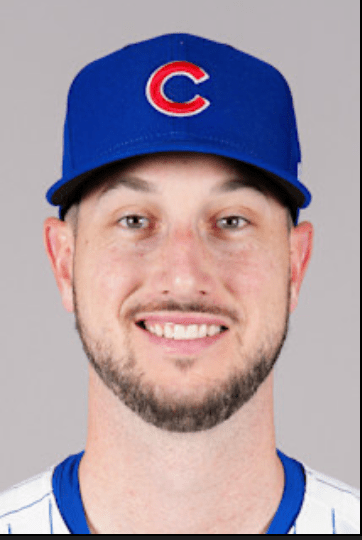
Prediction: In a perfect world I see him signing with the Mariners I could see them signing another outfielder to play alongside Julio Rodriguez. After making it all the way to game 7 of the ALCS, Kyle Tucker would be the perfect bat for the Mariners. I also see the Phillies signing him since their current outfield trio of Crawford, Marsh, Garcia is pretty weak. But the Phillies already signed Schwarber to $150 million deal. If Kyle Tucker signs for a short term deal I see the Mets or Dodgers swooping in. Both these teams want to win now and with the Dodgers having a spot in right field and the Mets having a spot in left field after trading Brandon Nimmo , Kyle Tucker could make sense for the team on a short term high AAV.
Final Prediction: Seattle Mariners
2. Alex Bregman
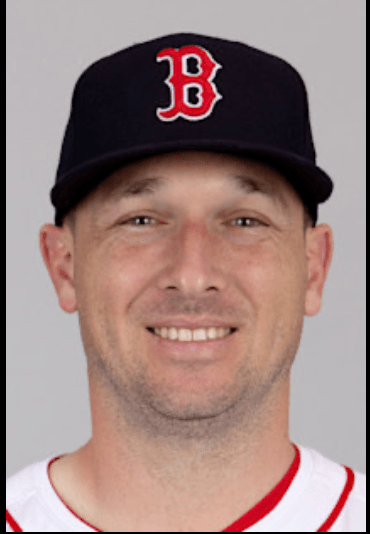
I really do see the Boston Red Sox getting him back. They need the veteran bat back in their lineup and he fit so well playing a year in Boston. He had 3.5 WAR in 433 at bats, 118 hits, 18 home runs, 64 runs, 62 RBIs, for a slash line of .273/.360/.462/.821 for an OPS+ of 128. Alex Bregman is foolish for opting out of his two year contract with the Red Sox when he could have easily been awarded $40 million for the 2026 season. The Red Sox missed out on Pete Alonso and Kyle Schwarber, I don’t believe the same will be true for Alex Bregman.
Final Prediction: Boston Red Sox
3. Cody Bellinger
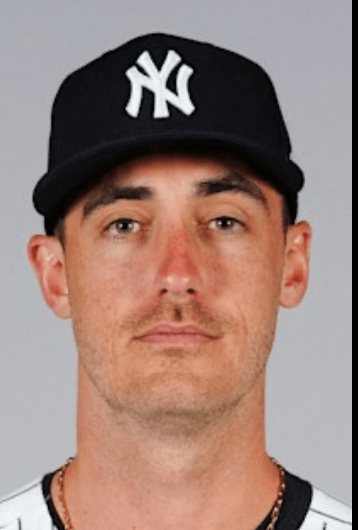
What better way for the Mets to continue the trend of signing ex-Yankees players then swoop in on Cody Ballinger. This is tentative how much Kyle Tucker signs for but both players said they will not sign unless the other one signs first. I am assuming that Kyle Tucker will be the first big domino to fall proceeding with Cody Bellinger now. Cody Bellinger wants $400 million but is looking more now at a $120 million contract, regardless much lower than Kyle Tucker even though he is a World Series champion, MVP and ROY winner I still believe Bellinger is in for a lower payday. Bellinger is incredibly versatile and can play both the outfield and first base, this is exactly what the Mets need. After loosing both Pete Alonso and Brandon Nimmo this offseason, the clear response to those problems are signing Cody Bellinger to fill in both of those positions. The Mets haven’t given out contracts longer than two years for position players this offseason but with the market being weak I have confidence they will find the common ground with Cody’s team. Plus he won’t need to move far from the Bronx!
Final Prediction: The New York Mets
4. Framber Valdez
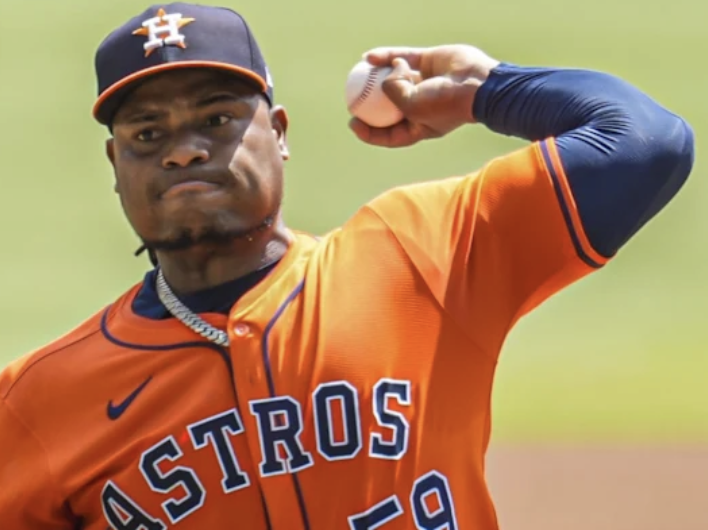
Our first pitcher on the rankings is someone I think is heavily underrated. He has put together five seasons of at least 2.5 WAR, along with 11 wins and a 3.66 ERA, and his career year came in 2022 when he went 17–6 with a 2.82 ERA, 3.4 WAR, and 201.1 innings across 31 games. He’s a proven workhorse and clearly in position for a big payday. I believe the Mets are in play for Framber Valdez if he’s willing to take a shorter-term deal, but the Baltimore Orioles are the team to really watch. They haven’t had a true frontline starter since Corbin Burnes, and before that you have to go back to Ubaldo Jiménez. The Orioles have already shown this offseason that they’re willing to spend, highlighted by the signing of Pete Alonso, and I don’t think they’re playing around anymore. Adding Valdez would signal that Baltimore is fully serious about contending right now.
Final Prediction: The Baltimore Orioles
5. Ranger Suarez
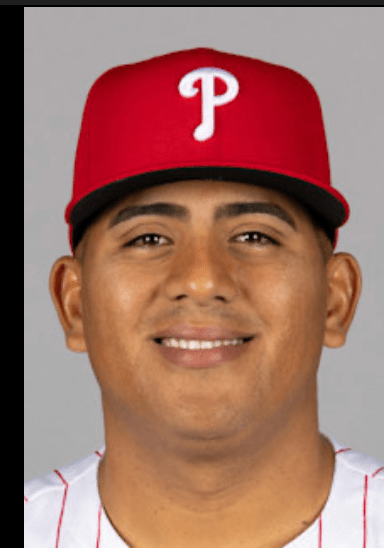
Ranger Suárez is one of the most underrated starting pitchers on the market, and the level of disrespect he’s been getting is hard to ignore. At just 29 years old, he’s been incredibly consistent, and like Framber Valdez, his five-year track record stacks up with some of the best pitchers in baseball. Last season with the Phillies, Suárez posted a 4.7 WAR, went 12–8 with a 3.20 ERA, and logged 157.1 innings across 26 starts for an ERA+ of 137. I could see the Red Sox being interested in Suárez as a legitimate number-two starter to back up Garrett Crochet, or the Atlanta Braves targeting him on a short-term deal to patch together their injury-riddled rotation. A return to Philadelphia is also possible, but it’s hard to see them paying up when they have Christopher Sánchez at a cheaper cost and already have big money committed to Zack Wheeler and Aaron Nola. The Houston Astros also make sense, as their pitching staff is thin and questionable behind Hunter Brown, but given their recent reluctance to hand out long-term deals to pitchers, Suárez could realistically land with almost any contender.
Final Prediction: Houston Astros
These are just predictions at the end of the day but I value these top five the most and believe these guys will have the biggest turnout in payday. Other notable names include Tatsuya Imai, Marcell Ozuna, JT Realmuto, Zac Gallen. There are so many players available but such little time to sign. Act now and get the most money possible before it is too late!
 MLB Prime Time Baseball.
Leave a comment