Through the trials and tribulations of this offseason, there is one thing we know for sure: the Pirates are trying to get back to October. It has been over a decade since the Pirates last made the playoffs, when they lost the National League Wild Card game to the Cubs. This past season marked the franchise’s 10th consecutive year without October baseball. Something had to change. Pirates fans were desperate to see their team return to the postseason, something an entire generation of fans has never experienced.
The Pirates’ payroll entering the 2026 offseason sat around the $80 million range, with their only major free-agent signing being Tommy Pham, who turned out to be nothing more than a below-average bat in an already weak lineup. Something needed to change. For a team that has arguably the best pitcher on the planet in Paul Skenes, it was critical to build around him and spend money on a young, competitive core.
Paul Skenes, who won the NL Cy Young Award in 2025 and has been one of the best pitchers in baseball over the past two seasons, has not shied away from being outspoken about the issues within the Pittsburgh organization. Another year finishing below .500 and another missed postseason falls on everyone involved, especially when there is no real boost given to the roster.
“Yeah, I mean, we’re just not executing at a high enough level and as consistently as we need to in order to win those games,” Skenes said. “I don’t think it’s a clubhouse thing. Everyone likes each other, but positive feelings and friendships don’t win championships. We’ve got to figure it out.”
While there is no salary floor in baseball, there is an MLB grievance mechanism tied to teams with extremely low payrolls that fail to reinvest revenue-sharing money into improving their on-field product. There is a pool of revenue-sharing money collected from all 30 teams. With the Pirates generating an estimated $309 million across the past two seasons, it’s fair to question whether enough of that money is being reinvested into the team and fan experience.
Many have claimed that owner Bob Nutting has used the franchise primarily as a profit vehicle rather than reinvesting in competitiveness. While MLB does not publish exact revenue figures for individual teams and these numbers are estimates, it’s clear the Pirates have made significant money. Under Nutting’s ownership, spanning roughly 30 years, the Pirates have produced only two winning seasons. Something had to change.
The system does have exciting young talent on the way, most notably Konnor Griffin. At just 19 years old, Griffin has hit over .300 across three minor-league levels and is projected to eventually take over the shortstop position from Jared Triolo. Outside of Skenes, however, several recent high-end draft picks have been less than ideal in terms of performance.
No longer should this franchise rely on cheap veterans or hope for miracle bounce-back seasons. Real contenders rely on proven players. That’s why it’s refreshing to finally see the front office make aggressive moves to support the 2026 roster.
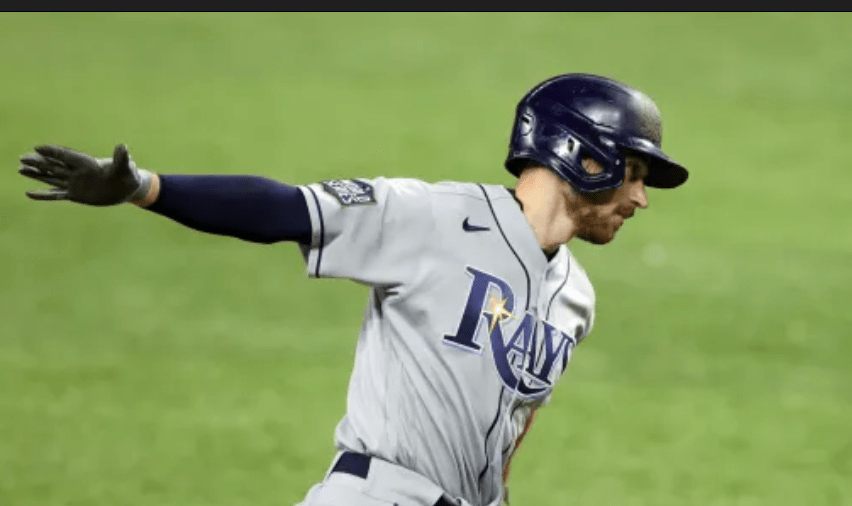
The Pirates were involved in a three-team trade in which they arguably came away with the best return. They acquired Brandon Lowe from Tampa Bay, a consistent power hitter who brings legitimate production to the lineup. Last season, Lowe hit 31 home runs with 130 hits, 79 runs, and 83 RBIs, posting a slash line of .256/.307/.477 and an OPS+ of 116. His best season came in 2021 when he made an All-Star appearance, drove in 99 runs, hit 39 home runs, and posted a 4.6 WAR. While Tampa Bay played in a minor-league park last season, which likely affected his power output, Lowe remains a highly effective everyday player.
The Pirates also acquired Jake Mangum, a switch hitter who collected 120 hits, three home runs, 40 RBIs, 37 runs, and 27 stolen bases while slashing .296/.330/.368. While his OPS+ sat slightly below league average, he has the tools to succeed and should fit well at PNC Park. In return, the Pirates gave up Joe Burrows, their fourth starter, making him the second pitcher named Joe to be traded from Pittsburgh to Houston, joining Joe Musgrove. This deal looks like a steal for the Pirates, as they landed a table-setting contact hitter and a power-hitting second baseman.
Pittsburgh also signed Ryan O’Hearn to play first base and serve as the primary DH for the 2026 season. O’Hearn is now the highest-paid free agent in franchise history, surpassing Ivan Nova’s three-year, $26 million deal from 2016. O’Hearn posted a strong season, recording 2.4 WAR, 133 hits, 17 home runs, 67 runs, and 63 RBIs, with a slash line of .281/.366/.437 and an OPS+ of 125. He should slot in nicely and stabilize a depleted lineup.
These moves collectively strengthen the Pirates’ offense and push them closer to contention. A few more additions, perhaps a veteran pitcher, could be the final difference-maker. Entering 2026 with Skenes, Lowe, O’Hearn, and Oneil Cruz is a strong foundation.
General manager Ben Cherington has said this team is willing to spend and is hungry to compete. If that’s true, this may finally be the start of a new era in Pittsburgh. Good for small-market teams. Let’s go.
 MLB Prime Time Baseball.
Leave a comment