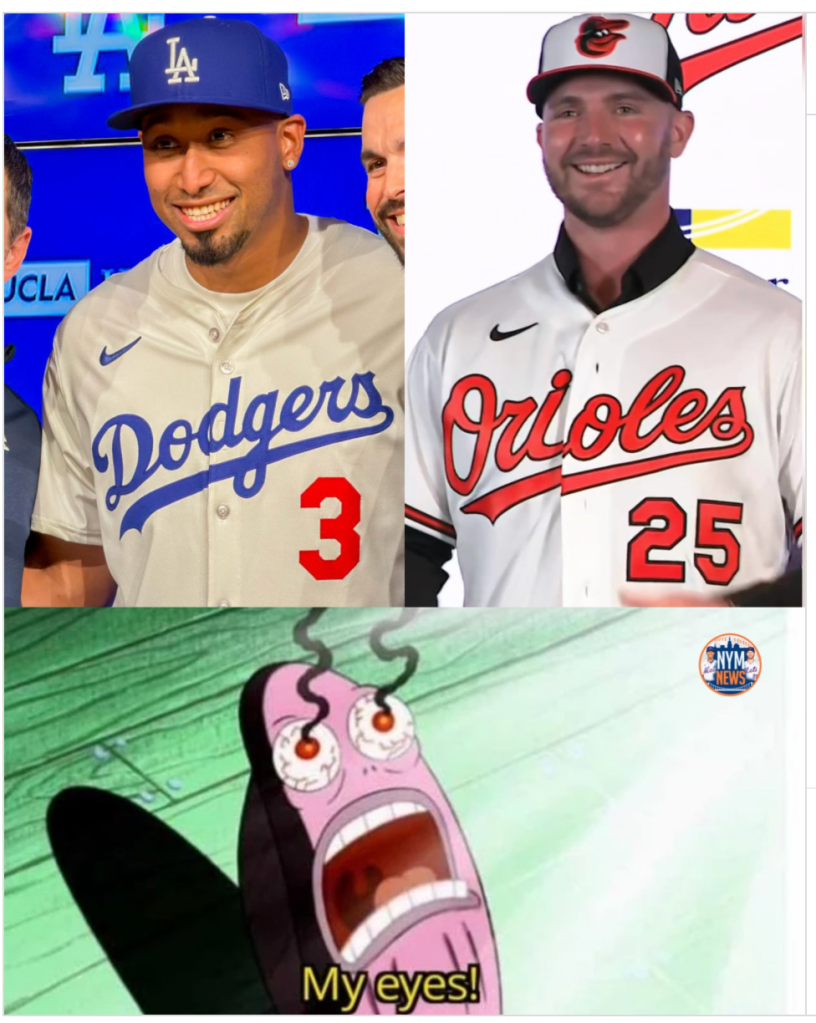
A pain that simply will not go away, and one that will take time to heal. The star power that once defined Queens, New York is now broken up for the foreseeable future.
An owner who once made the righteous proclamation that he would never be outbid for a star player has now fallen prey to his own words, as both Edwin Díaz and Pete Alonso will be representing different teams in 2026 and beyond. It is hurtful, disgraceful, and utterly infuriating that an owner with over $20 billion has seemingly given up on bringing back the core that defined this team for the last seven years.
Yes, David Stearns is the man who runs the show and Steve Cohen is simply the man with the checkbook; however, Cohen could have stepped in at any moment and written a check to both players to guarantee they wouldn’t leave Queens. But that’s not how things work, and most of the time it isn’t only about bidding more money — it’s about the other teams involved.
Steve Cohen has been open about his opposition to “spending like a drunk sailor” and has made it clear that he wants to build a sustained winning culture similar to the Dodgers. However, the core that has been here for the past several years has had nothing to show for itself in high-pressure games. The closest they came was Game 6 of the NLCS against the eventual World Series–winning Dodgers, and beyond that they have not even reached the World Series.
Now, you can argue that these guys simply didn’t do their part in bringing a World Series back to Queens, but I don’t think any of that blame falls on Pete Alonso and Edwin Díaz — two of the best at their positions. Baseball is a team sport, and time and time again the players who consistently perform don’t receive the respect they deserve when it’s time to collect their paycheck. They get blamed when the team fails, even when they’ve done everything right.
What I don’t understand is refusing to justify bringing back a player who is clearly worth so much to the team — both on the field and financially — and choosing not to offer him the contract he rightfully deserves.
Executive Andrew Friedman of the Dodgers once said, “If you’re always rational about every free agent, you will finish third on every free agent.” And this is true. Take Pete, for example: he has hit roughly 40 home runs a year (excluding the COVID 60-game season) and driven in over 100 RBIs each of those seasons, all while playing nearly every day. Many label him an “iron man” or a team player, yet general managers like David Stearns treat him like a bottom-tier player when addressing his contract situation. You pay a player for their past résumé and hope they can recreate that success. You don’t make false assumptions that simply because he’s entering his 30s he will suddenly fall off.
This was Pete Alonso’s most well-rounded season, and it’s apparent that the Mets didn’t even offer him a final contract or meet with him at the Winter Meetings. That’s a knife-to-the-heart moment — watching a fraudulent executive who still thinks he’s running a small-market Milwaukee team tank one of the richest teams in baseball.
Is this an overreaction? Of course it is. But it’s also an overreaction for David Stearns to claim Pete Alonso is suddenly declining and therefore only worthy of a three-year deal instead of the expected five. Meanwhile, they justify bringing in a replacement-level bat to take over first base.
Even if Pete Alonso does regress, Baltimore took that into consideration — but didn’t let it overshadow his value. He is a difference-maker, and now the Mets enter the season without their captain while a young Baltimore team gets gifted elite veteran leadership. The Mets should have valued his talents more instead of letting him go without even putting a real final offer on the table.
Now let’s talk logistics. The Mets signed Jorge Polanco to a two-year, $40 million deal to be their primary DH and part-time first baseman. In 2025, Polanco hit 26 home runs with 78 RBIs and posted a slash line of .265 / .326 / .495 for an .821 OPS — 34% better than league average. Meanwhile, Alonso goes to Baltimore on a five-year, $155 million deal with the potential to reach $185 million over six years. All it took to sign one of the best power hitters of this generation — our homegrown guy — was $31 million a year, roughly 0.13% of Steve Cohen’s $23 billion net worth.
Pete Alonso meant everything to this franchise. From breaking the all-time rookie home run record, to becoming the single-season Mets RBI leader, to cementing himself as the greatest home run hitter in Mets history. Peter Morgan Alonso finishes his seven-year Mets tenure with 951 hits, 264 home runs, 580 runs, and 712 RBIs with a 135 OPS+. A 2019 Rookie of the Year, 2019 and 2021 Home Run Derby Champion, five-time All-Star, and one-time Silver Slugger has finished his Mets legacy on a high note.
It’s a painful disappointment to write that someone as talented as Pete left the team that raised him in order to chase a bag. Players today are so focused on career earnings that it leaves a stain on the game. A sport cherished by millions has become one big tug-of-war where the highest bidder wins.
Players always say they signed somewhere because the team gave them “the best chance to win.” For some, that’s true. But for the rest, it’s simply a cover for getting the biggest payday. And frankly, I don’t agree with Pete’s take that the Orioles are the most ready team to win a title in 2026. If the Mets had brought him back, we would be just as ready — if not more.
Baseball is still a team sport. Baltimore trusts its young players to deliver. While Gunnar Henderson and Adley Rutschman are legit, you cannot rely on theoretical hypotheticals that adding Pete Alonso will magically make every player perform at their best.
I’m angry, but I can at least understand Pete. He proved himself year after year and deserved his contract. I’m not mad at him. But Edwin Díaz? That’s another story entirely.
Edwin Díaz and the trumpets of “Narco” that electrified Citi Field every ninth inning are now just a memory. Díaz is on his way to Los Angeles to join the dark side. In some ways, this hurts even more than losing Pete, because now Díaz is someone the Mets will have to go through to make it deep into October. And unlike Pete, Díaz actually received more money and longer-term deals from other teams — but still chose the Dodgers because he believes it gives him the best chance to win a World Series.
It’s sickening to think that the best closer in baseball — someone who represented the Mets with pride — is now a Dodger. After being written off as a “throw-in” from Seattle, after being labeled a bust in 2019, he rebuilt himself into the best closer in the league. Now, after a 3.0 WAR season with a 1.63 ERA and 99 strikeouts, he’s gone. He reportedly wasn’t happy the Mets let Jeremy Hefner go, and it left a bad taste in his mouth. His brother Alexis spoke highly of the Dodgers’ culture, which seemed to push Edwin toward signing there. Ironically, Alexis only pitched nine games with a 5 ERA — but apparently that was enough.
Díaz wanted five years. The Mets only offered three. Once the Dodgers got involved, he signed the next day. He was waiting for that moment — waiting for the Dodgers to raise his market, and once they did, the Mets were out.
Now the Mets are left without Pete Alonso and without Edwin Díaz, as both chose the teams that offered more money and a clearer path to a championship. All you can say now is: thank you for everything. And good luck.
Amen.
 MLB Prime Time Baseball.
Leave a comment