In today’s game, there’s a heavy emphasis on young players rushing to the big leagues by making flashy plays, throwing hard, and hitting for power. While these traits are important, they don’t define a player’s true value. What makes a player truly exceptional is a blend of skills, each contributing to their overall effectiveness on the field.
Is it the ability to work the count and get on base? Is it speed and base-stealing? A defensive mindset and putting your body on the line? Or is it sheer power and slugging? These are all important qualities, but no single trait guarantees success at the major league level. Players don’t need to master every tool to be great.
While power hitters like Aaron Judge, Shohei Ohtani, and Yordan Alvarez dominate the game with their home runs and slugging, it’s important to remember that power isn’t the only path to success. A player who excels in other areas—whether it’s getting on base, stealing bases, or playing elite defense—can be just as valuable, if not more so.
Baseball today is about more than just raw power; it’s about integrating a well-rounded skill set. Relying on one aspect of the game—like power—can limit a player’s effectiveness in an increasingly dynamic sport. True greatness comes from being able to contribute in multiple ways, whether it’s with the bat, the glove, or on the basepaths. Unfortunately, some players known for their raw talent and power often get overlooked, as teams are hesitant to invest in a one-dimensional skill set. Power can certainly be a valuable tool, but it has to be used strategically. For example, hitting a home run might not always be the best option when it comes to preserving a team’s rally or advancing runners.
A player’s statistics can also be heavily influenced by the lineup around them. The hitters in front of and behind a player can affect how many opportunities they get to drive in runs or see good pitches. Additionally, power production is often impacted by ballpark dimensions, weather, and other external factors. Despite this, in today’s game, power is sometimes undervalued as one of the primary tools for evaluating a player’s worth.
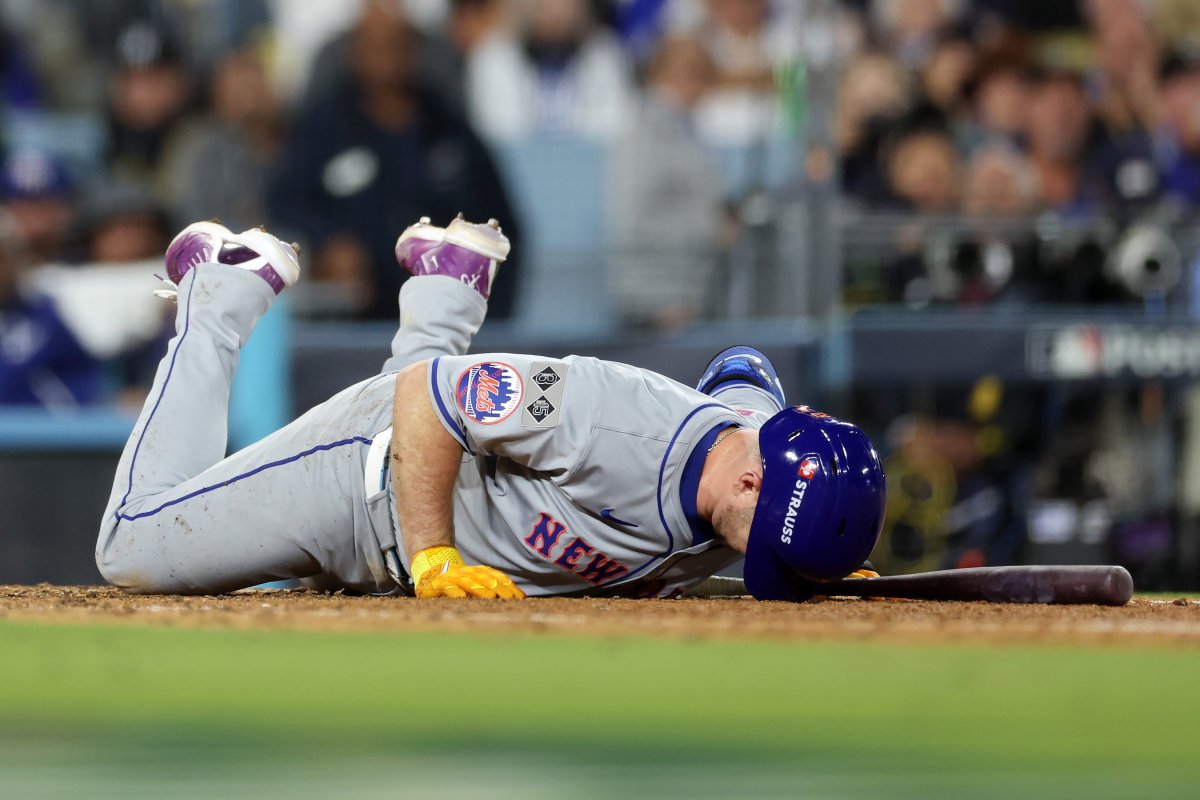
Power is a young man’s tool, and used excessively, it can lead to injuries and a slower performance on the field. If your resume doesn’t have you hitting at least above .260 with an OPS well over .800 and an OBP close to .400, it’s hard to get more than what the league values you as. Over the past few years, Pete Alonso’s game has shifted noticeably beyond just his power numbers. While his home run totals have remained impressive, his overall approach at the plate has become more swing-happy, leading to a significant rise in strikeouts—from 128 in 2021 to 172 in 2024. His batting average has dropped steadily, from .271 to .240, reflecting less consistent contact. Along with this, his ability to get on base has also taken a hit, with his OBP sliding from .352 in 2021 to .329 in 2024. Essentially, while Alonso’s power still stands out, his struggles to maintain balance in other areas of his game—like contact and plate discipline—have made him a more one-dimensional hitter in recent years.
Take Brandon Belt, for example. In 2023, Belt played for the Toronto Blue Jays, where he hit 19 home runs, posted an OPS of .858, and had a slugging percentage just shy of .500. That would be considered a successful season for most players. Yet, given his age (35), no team was willing to take a chance on him for a long-term deal. Instead, Belt ended his career prematurely, without truly being able to maximize his potential. This scenario highlights the growing hesitancy among teams to invest in players whose main asset is power, especially as they get older.
This leads us to a broader issue: teams are increasingly reluctant to offer long-term contracts to players whose value is primarily tied to power. The fear is that the player’s one-dimensional skill set will fade quickly, leaving the team with an aging asset who no longer contributes at a high level. As a result, even proven power hitters are finding it difficult to secure lucrative deals.
One player who exemplifies this dilemma is Pete Alonso, the Mets’ all-time rookie home run leader, two-time Home Run Derby champion, and one of the game’s premier power hitters. Despite his impressive track record, Alonso remains a free agent, caught in a standoff between what he believes he’s worth and what the league is willing to offer him. His power is undeniable, but the question remains: does the league value it enough to offer him a long-term contract, or will he, like many other power hitters before him, find his market limited as teams place more emphasis on versatility and well-rounded skills?
Alonso’s situation highlights the growing divide between a player’s self-perceived value and the evolving priorities of MLB teams, which are increasingly hesitant to commit big money to a player whose main tool is slugging, especially as the game continues to shift toward a more multi-faceted approach.
Pete Alonso is another superstar in baseball overconsumed by his financial worries. Let’s reiterate here—every player has the option to bet on themselves and reach the free market if they so choose to do. However, when the demand for the market has lowered significantly, it is not reasonable to expect a higher financial payout when teams simply aren’t interested in reaching your demands. Money is the root of all evil and, frankly, ruins the fundamentals of the game. The market is always changing, and just because a player received $300+ million in free agency does not mean that, even with similar high-end performance, you will receive the same lucrative deals. Teams are generally more hesitant to invest in longer-term deals if they believe there will be a sharp decline in player production.
Pete Alonso, with 226 home runs—only behind Aaron Judge for the most since his debut in 2019—has every right to reach the open market. Alonso was offered a 7-year, $158 million deal in 2023, which he swiftly declined before firing his agent and turning to Scott Boras, hoping Boras could land him a more lucrative contract. He would have earned roughly $22.5 million a year with possible performance-based incentives. Boras, notorious in baseball for overvaluing his clients, often scores significant paydays. But his high price points make it hard to negotiate, especially with his lower-end agents. Marked by unrealistic expectations, Pete Alonso’s time with the Mets could be in serious jeopardy. Why flounder over a few million per year? If your heart is with a city, why care about what you receive individually when the merit of the game is derived from a team collaboration of all efforts?
To put things into further perspective, the top three highest-earning first basemen in 2024 are Phillies first baseman Bryce Harper ($27.5 million), Freddie Freeman of the Dodgers ($27 million), and Matt Olson ($22 million). Matt Olson was signed to a team-friendly extension after being traded from the Athletics, long before he would have reached free agency. Freddie Freeman’s Dodgers contract includes deferrals that make his contract $24.6 million per year, with $57 million deferred from 2028-2040. His original team, the Atlanta Braves, offered Freeman more money, but his agent took the Dodgers deal instead, not telling Freeman about the Braves’ offer before being let go. As for Bryce Harper, he signed a $330 million contract in 2019 over 13 years, originally to be a right fielder, and the contract included no deferrals.
So, there has never been a player who’s put up such notable stats in the power department, waited out free agency, and received a hefty lump sum of money over $200 million. First base is a less-than-desirable position when it comes to free agency; players usually don’t go out expecting to become a $300 million man playing one of the easiest positions on the diamond. It just doesn’t work that way. There are players from MLB’s past and present who could easily make that money in the current market, but Pete Alonso is not one of those guys. From being seen as one of the best team players and power bats to think that he would slightly undervalue himself for the sake of returning to his team—it’s a shame. No team values Pete as Pete values himself.
There may be a team that will cough up that kind of cash for Pete, but that’s just out of desperation—and that’s exactly the kind of corruption Scott Boras craves. He loves upsetting the market, redefining player values, and filling his own pockets with players’ unrealistic demands, waiting out smart deals just for the hope that someone will listen.
 MLB Prime Time Baseball.
Leave a comment