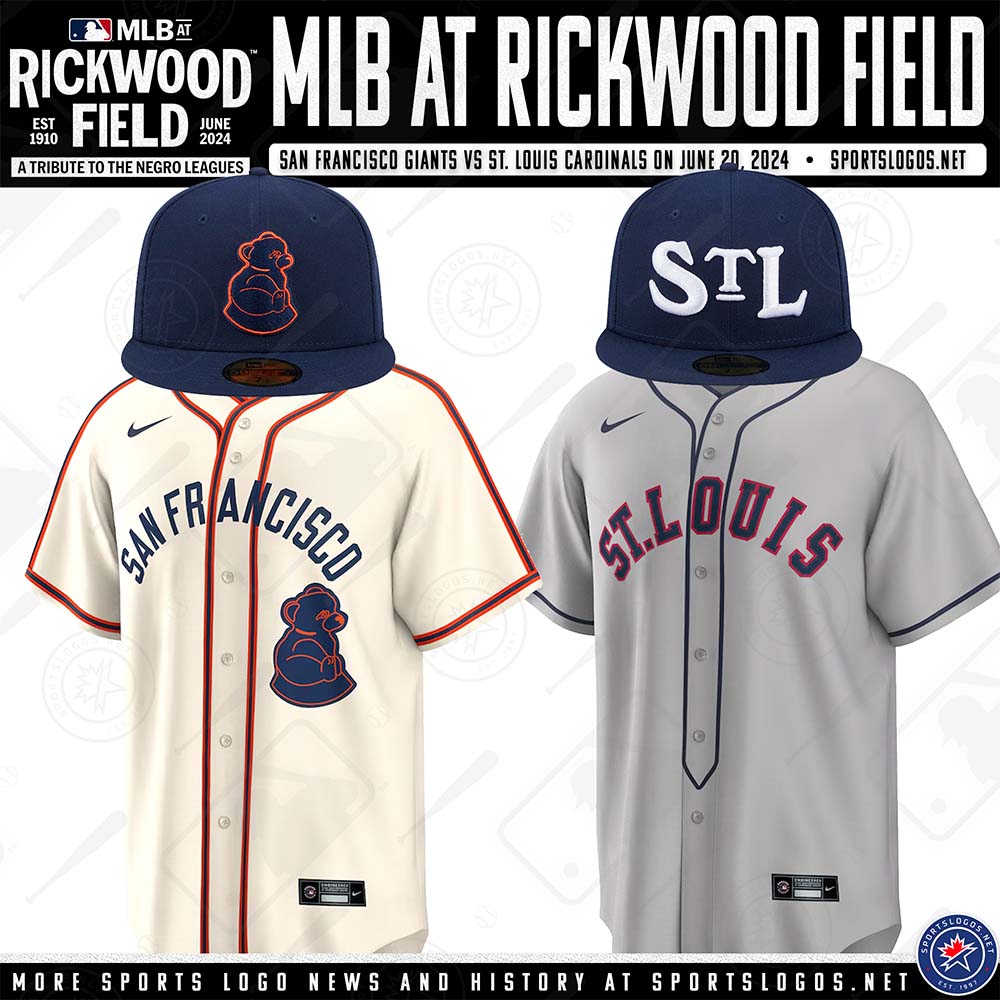
Major League Baseball (MLB) this week honored the Negro Leagues with a historic event. At Rickwood Field, the oldest ballpark still standing in the United States, the St. Louis Cardinals and the San Francisco Giants, two of the league’s most established teams, played a game. This event transcended the competition itself, originally marred by racial prejudice. It was a powerful moment of recognition, finally granting the Negro Leagues the respect they deserve as a significant part of baseball history. Fast forward to last year when MLB officially announced the Cardinals and Giants game to further give recognition to the Negro baseball teams that played in San Francisco and St Louis. The Cardinals wore a grey uniform that read “St. Louis” across the chest. The uniform was a homage to the St. Louis Stars Negro Leagues team that played from 1906-31. The hat is blue and has the city initials of “StL” written across. As for the Giants, they wore a white uniform that read “San Francisco” across the chest logo and the resemblance of a bear on the shirt. The uniform was inspired by the San Francisco Sea Lions, the team in the city that played one season in the West Coast Negro Baseball League in 1946.
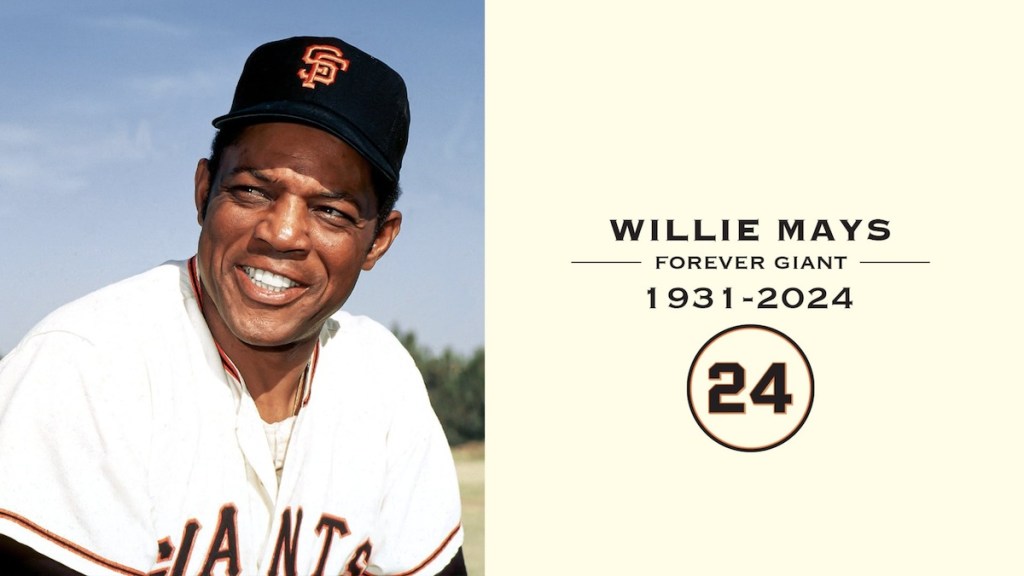
The game was tinged with sadness, however, coming just days after the passing of Willie Mays, a legend many consider the greatest player ever. Mays, who died at 93, achieved an unparalleled career,collecting over 3,000 hits, hitting more than 600 home runs, maintaining a lifetime batting average above .300, winning multiple MVP awards, a Rookie of the Year title, a World Series championship, playing in the iconic New York City, and ultimately securing his place in the Baseball Hall of Fame.
Major League Baseball’s tribute at Rickwood Field held even greater significance for Willie Mays, who recently passed away. At 17, Mays made his professional debut on that very field in 1948. There, a young Mays faced off against legendary Negro League pitcher Satchel Paige, who famously struck him out with three fastballs. Despite the strikeout, Mays was awestruck by playing against such a giant. He spent his first three seasons (1948-1950) with the Birmingham Black Barons before being signed by the New York Giants. Mays is considered one of the greatest players ever, both in the Negro Leagues and Major League Baseball. Following Jackie Robinson’s path, he played a pivotal role in integrating the sport, demonstrating his courage to compete alongside white players. Throughout his career, Mays displayed remarkable resilience, never shying away from challenges. We mourn him not just as the greatest center fielder baseball had ever seen, but also as a wonderful human being. While the Giants may have lost the game at Rickwood Field, the true victory belonged to the African American community, finally receiving long-overdue recognition for their rich baseball history.
Rickwood Field, once home to the Birmingham Black Barons of the Negro Leagues, boasts a rich baseball history. Countless Hall of Famers, including legends like Josh Gibson, and Satchel Paige, and even future MLB stars like Jackie Robinson graced its field. During exhibitions, major league greats such as Honus Wagner, Ty Cobb, Walter Johnson, and Babe Ruth also took the field at the very park. At a time of brutal segregation in America, Rickwood became a haven for the African American community. Here, amidst the cheers and crack of the bat, the sting of racial prejudice seemed to fade. Stepping onto the diamond transformed it into a laboratory of sorts, where the worries of the outside world dissipated beneath the unifying power of baseball and community.
Rickwood Field, a testament to baseball history, opened its doors in 1910. It became the first Minor League ballpark constructed from concrete and steel. Founded by Birmingham industrialist Rick Woodward, the stadium was his vision for bringing joy to the city. Woodward acquired the Birmingham Coal Barons, the city’s professional team, and Rickwood Field became their home. However, the issue of racial integration remained. While the stadium never hosted a game with integrated teams until after 1947, it reflected the slow but growing movement towards equality in baseball, a movement championed by Jackie Robinson’s groundbreaking entry into the Major Leagues with the Dodgers.
After failing to restore the facilities of Rickwood Park and thinning attendance at the stadium, the Black Barons had to relocate to a new stadium. They moved out north to the ‘Hoover Metropolitan Stadium.’ After the departure of the team the city leased the old ballpark to the Board of Education for high school baseball, at that point it felt Rickwood’s days were numbered. Once the demolition of Comiskey Park occurred in the early 1990s Rickwood Park went from being just old to the historic property. The park became officially landmarked in 1992 after the ‘National Register of Historic Places’ acknowledged the uniqueness and aura of the stadium’s history as one of three remaining stadiums that held the great Babe (Fenway, Wrigley).
Major League Baseball’s decision to host its first in-season game at Rickwood Field after Juneteenth necessitated significant renovations. Beyond the historical charm, the field itself was in dire need of repair. Weeds sprouted, lights flickered, and the overall condition resembled a neglected field more than a professional stadium. The cramped dugouts felt like bunkers, and a massive hill completely blocked the view of left field from the dugout. To address these issues, MLB undertook a comprehensive restoration. They lowered the playing field by removing 4,000 tons of material and brought in the outfield walls. The monstrous hill in left field was also eliminated. Additionally, the project included an upgraded playing surface, padded outfield walls for player safety, expanded dugouts for better functionality, and enhanced lighting. A clever touch was preserving the vintage advertisements, transporting fans back to the 1950s with each glance.
While the stadium’s history held undeniable charm, the playing field was rough. Previously known for its quirky dimensions that favored extra-base hits over home runs (a trend that wouldn’t become popular until Babe Ruth’s arrival), the field underwent significant adjustments. A massive hill obstructing the view from the dugout was removed, and the outfield walls were brought in. The left field saw the most dramatic change, with the fence brought in a whopping 80 feet, from 405 feet to 325 feet. The center field was reduced by 77 feet, from 470 feet to 393 feet, and the right field saw a minor adjustment from 334 feet to 332 feet. These changes made hitting home runs more feasible, as evidenced by the game itself. Notably, the Giants’ young centerfielder, 24-year-old Heliot Ramos, launched a three-run homer into the stands. A clever touch was preserving the vintage advertisements, allowing fans to feel transported back to the 1950s.
Following Major League Baseball’s recent adoption of statistics from the Negro Leagues, a long-overdue recognition for these previously unheralded players is finally underway. Josh Gibson, a dominant catcher and first baseman who spent 14 years in the Negro Leagues, exemplifies this movement. For nearly 80 years, the Negro Leagues remained outside the official Major League Baseball narrative. Now, with their inclusion in the official statistics, these players, like Gibson, Paige, and ‘Bullet Rogan’ rightfully take their place among baseball’s all-time greats. It is long overdue for the acknowledgment of the Negro league. It was still a pro ball, especially with how the Black Barons became a breeding ground for Connie Mack and the three World Series consecutively champion-winning Athletics as some of their brightest stars like Vida Blue, Rollie Fingers and most notably Reggie Jackson all were apart of Oakland A’s minor league team in Birmingham called the Birmingham Athletics. All the players of the Negro League should be recognized on the same wavelength as much as Jackie Robinson and Willie Mays brought to baseball. Just because some of these guys like Josh Gibson, Bill Greason, and Bullet Rogan never got to experience an opportunity in baseball doesn’t mean the impact they’ve brought and touched onto many people’s lives didn’t occur
.
‘Bullet Rogan, Bill Greason, Josh Gibson’
During a time of such racial hardship, there was little area where African Americans could feel equal without harsh judgment and infliction from the white folks. But once the uniform was put on all the worries of the outside world faded away. In some ways, this had an even greater influence on younger generations dealing with segregation. Young boys seeing Josh Gibson take the plate, surrounded by other talented African American players, felt a sense of acceptance. They saw themselves reflected in those athletes – one of many with a dream. Though racial division was stark at the time, seeing others of their skin color succeed truly resonated with them. It offered a powerful message: that there would soon be a day when people of every ethnicity and racial background would share the field. The long-awaited recognition of the Negro Leagues marks a new chapter in Major League Baseball. We’re finally celebrating the previously under-appreciated corners of the sport, embracing fresh ideas, and fostering exceptional talent from around the globe. Today’s young stars, like Juan Soto, Ronald Acuña Jr., Vladimir Guerrero Jr., Fernando Tatis Jr., Julio Rodríguez, and Francisco Alvarez, all hail from countries beyond the US and are poised to become generational talents. While baseball continues to expand its reach, this tribute to its roots is truly significant. It demonstrates a long-overdue appreciation for the sport’s origins. Without the groundwork laid by the Negro Leagues and the vibrant community they fostered, players like Jackie Robinson and Willie Mays wouldn’t have had the platform to shine in the major leagues. The Giants lost but it’s still a Giant win for America and for further restoring justice in the African American community.
Prime Time Baseball is an independent sports platform created by James Leather, a 22-year-old senior at Binghamton University with a lifelong passion for baseball. What started as a personal outlet has grown into a space focused on storytelling, accessibility, and modern baseball analysis.
This platform isn’t just about box scores or surface-level stats. It’s about context. Prime Time Baseball breaks down pitching mechanics, advanced metrics, roster construction, and front-office decisions in a way that both casual fans and hardcore followers can understand quickly. The goal is to make dense baseball topics feel approachable, not overwhelming.
As an avid Mets fan, that perspective naturally shows up here, but the focus goes beyond one team. Prime Time Baseball aims to create storylines across the league — highlighting player development, trends, and moments that shape the game beyond numbers alone.
There is also a strong interest in marketing and SEO behind the scenes. This page is built to grow, evolve, and eventually expand into coverage of other sports. It’s a work in progress, and that’s intentional. The platform grows as the writing grows.
Prime Time Baseball is for fans who want to learn, engage, and enjoy the game on a deeper level — without needing a statistics degree to do it.


 MLB Prime Time Baseball.
Leave a comment