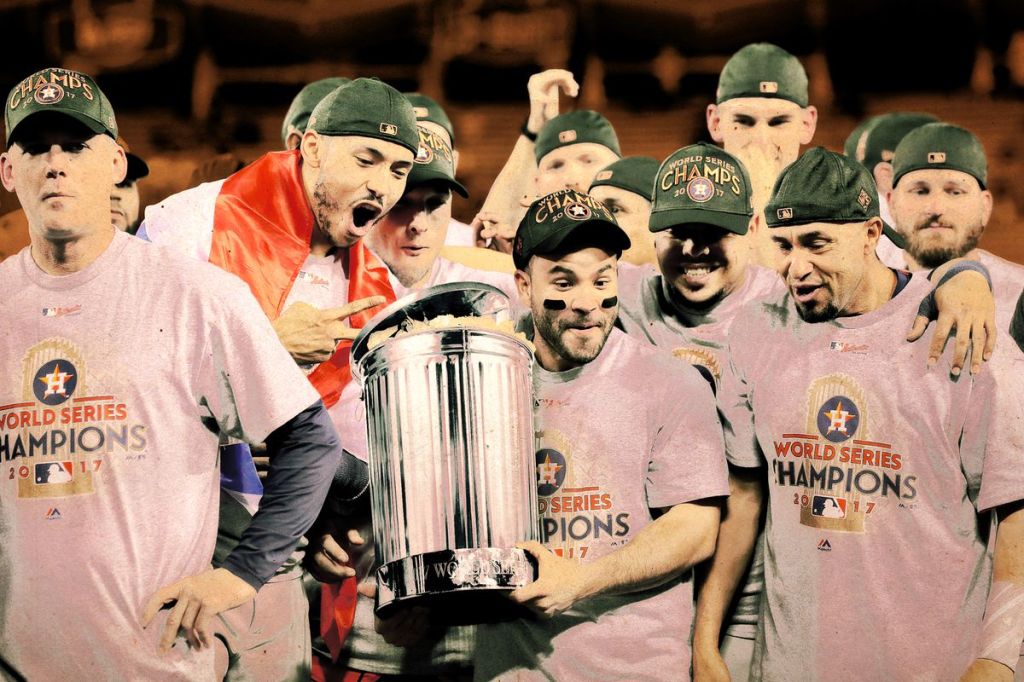
The Houston Astros, once hailed as MLB juggernauts, have stumbled into a dire start to their season with a disastrous 7-19 record, placing them at the bottom of the AL West division. This unexpected downturn contrasts sharply with their historic success, including four World Series appearances and two championship victories in recent years. However, their current struggles on the field paint a starkly different picture, leading some to dub them the Ass-tros for their recent lackluster performance. They are in the middle of their worst start of a season since 2016 when the club went 84-78. A year before the Astros would go on to “win” the World Series in 2017 they’ve since become the juggernaut of baseball.
The Astros’ woes extend beyond mere win-loss statistics, as their bullpen, once a formidable asset, now ranks as the second-worst in the AL. Despite high hopes pinned on closer Josh Hader, his abysmal performance has contributed to the bullpen’s woes, with an average ERA of 5.13 casting a shadow over the team’s prospects. The decline of their once-reliable pitching staff has left many questioning the team’s ability to remain competitive in the long term.
Compounding their on-field struggles is the looming issue of their depleted farm system, currently ranked dead last in baseball. The Astros’ reluctance to retain key players like George Springer, Carlos Correa, and Justin Verlander has raised concerns about their long-term viability. With major talent departures looming on the horizon, including the potential loss of Alex Bregman, the Astros face a pivotal moment in their franchise’s trajectory.
While veteran pitcher Justin Verlander continues to defy age with his performance, the Astros’ pitching rotation as a whole has faltered, ranking near the bottom in every pitching category. However, glimmers of hope emerge with emerging talents like Ronel Blanco, who recently threw a no-hitter, providing a beacon of optimism amidst the team’s struggles.
As the Astros grapple with their worst start to a season since 2016, questions abound about their future direction. The once-dominant force in baseball must now confront the harsh reality of their decline and contemplate the necessary steps to rebuild and replenish their ranks. With their established offensive core largely intact, the Astros have the foundation for a resurgence, but it will require strategic planning and a commitment to investing in their future to reclaim their former glory. 4 World Series appearances, 2 World Series wins( 2022, *2017*) and 2 ALCS defeats, if this is the end of the Astros run of greatness it marks 7 years of the Astros being the most dominant and Yankee killing team there is.
The Astros’ current predicament serves as a cautionary tale for teams that rely heavily on short-term success without adequately investing in long-term sustainability. Their reluctance to retain key players and their farm system’s deterioration highlight the perils of prioritizing immediate gains over future stability. The departure of star players like George Springer and Carlos Correa, once integral to their championship runs, underscores the importance of maintaining a strong pipeline of talent to sustain success over the long haul.
Moving forward, the Astros must navigate a delicate balancing act between rebuilding their roster and remaining competitive in the present. While their offensive firepower remains formidable with talents like Kyle Tucker, Yordan Alvarez, and Jose Altuve, addressing their pitching woes and bolstering their farm system will be imperative for sustained success. With strategic planning and a commitment to cultivating talent from within, the Astros have the potential to rise from their current slump and reclaim their status as perennial contenders in Major League Baseball.
As the Astros grapple with the possibility of a rebuild, it’s evident that regaining competitiveness will be a gradual process. Ranked dead last in minor league talent, the Astros face the daunting task of replenishing their roster with promising prospects if they opt to trade away key players. Smart decision-making will be paramount in charting their course forward. Joe Espada, in his inaugural stint as the team’s manager, carries the weight of expectations as he steps into the role previously held by Dusty Baker. Having served under Baker’s tutelage during the era marred by the cheating scandal, Espada inherits a team grappling with a shift in leadership and culture.
While it’s unfair to solely attribute the Astros’ struggles to managerial changes, there’s a palpable sense that the team has lost some of its competitive edge since Baker’s retirement. Despite achieving the improbable feat of winning the World Series within a five-year span without resorting to cheating, the Astros now find themselves at a crossroads. The departure of a manager who instilled a relentless drive for success has left a void that needs to be filled.
Yet, amidst the challenges, there remains a glimmer of hope for the Astros’ resurgence. With a storied history of overcoming adversity, there’s a belief that they will emerge stronger as the season progresses. Anticipation mounts for a potential turnaround, with the possibility of a dramatic winning streak looming on the horizon. However, if the Astros fail to clinch a playoff spot, the balance of power in the postseason could tilt in favor of perennial contenders like the Yankees. Despite the uncertainties, the Astros’ journey toward redemption is underway, fueled by a determination to reclaim their status as elite contenders in Major League Baseball.
 MLB Prime Time Baseball.
Leave a comment